— Cerealis
A century-old group in the agri-food sector, specializing in cereal-based products, with a strong international presence. Focused on products derived from grain processing, it is a leader in pasta and industrial flours, complementing its range with culinary flours, cookies, breakfast cereals, and cereal bars.
Cerealis owns 11 commercial brands, including the Nacional, Milaneza and Napolitana brands, employs more than 760 people and processes more than 440,000 tonnes of cereals a year in its 4 certified production centres. Its more than 130 products in different categories are now sold on five continents.
— Our Mission
Mindful of our responsibility to promote healthy eating and lifestyles, Cerealis fosters a culture of knowledge, both internally and externally, by developing nutritionally balanced products. We are a Group driven by competent and motivated people.
We are a Group focused on products derived from the processing of cereals, based on good practices, sustainability, and the permanent strengthening of competitiveness, focussed on the pasta business, breakfast cereals, industrial and culinary flours, where it aims to be a leader, and other synergistic products, namely biscuits and cereal bars.
— Organizational chart

— Social entities
Board of Directors
President:
Carlos António Rocha Moreira da Silva
Executive Vice-President:
Pedro Miranda Moreira da Silva
Board Member and Administrator – Delegate:
Paula Cristina Dias Meireles
Board Member:
Francisco José Mestre Mira da Silva Domingues
Board Member:
Rita Mestre Mira da Silva Domingues
Board Member:
Rui Manuel de Amorim Silva e Sousa
Board Member:
Victor Emmanuel J Casier
Board of the General Assembly
President:
Carlos Lucena
1st Secretary:
Tiago Sampaio
2nd Secretary:
Cristina Maria Rodrigues da Rocha Gonzalez Bernardo
Renumerations Committee
President:
Carlos António Rocha Moreira da Silva
Board Member:
Francisco José Mestre Mira da Silva Domingues
Board Member:
Victor Emmanuel J Casier
Supervisory Board
President:
Daniel Bessa Fernandes Coelho
Board Member:
Óscar José Alçada Quinta
Board Member:
Manuel Joaquim Gomes Ortigão de Oliveira
Substitute:
Sandra Helena Pinto de Sousa Pereira
ROC
ERNST & YOUNG AUDIT & ASSOCIADOS– SROC, S.A.
Represented by Rui Manuel da Cunha Vieira
— Cerealis Today
410000
Tons of processed cereals
9
Factories — 8 in Portugal and 1 in Czechia
5
Product Categories
760
Collaborators
11
Comercial Brands
Production Capacity, Specialization,
Certification, and Geographic Versatility
Portugal
Trofa: Cereals and Bars
Maia: Semolina Mill, Pasta (2), and Biscuits
Lisbon: Soft Wheat
Porto: Soft Wheat and Rye
Czechia
Litovel: Pasta
— Industrial Facilities
Trofa Industrial Center
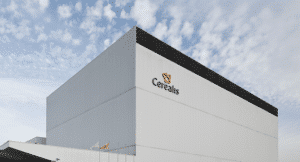
It is here that we have one of the most modern breakfast cereal production centers in the Iberian peninsula.
LAND AREA — 19.934 m2
COVERED AREA — 8.531 m2
Maia Industrial Center
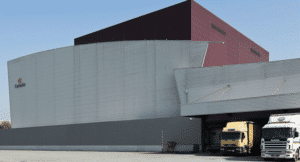 This center specializes in the production of pasta (one semolina and two factories), as well as the production of biscuits, and is also the Group’s most important logistics hub.
At Maia we integrate the entire pasta production process, from receiving the raw material (hard wheat) to the final product.
WHEAT SILAGE — 9000 Ton
LAND AREA — 48.500 m2
— 23.500 m2
Porto Industrial Center

In the industrial center of Porto (Freixo), soft wheat and rye milling is located, with industrial flour packaging lines and direct shipping to our customers.
LAND AREA — 7,290 m²
COVERED AREA — 3.047 m2
Lisbon Industrial Center
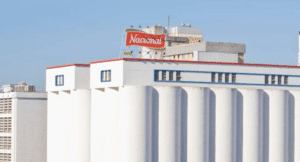
The renovated industrial center of Lisbon has a milling capacity of 720 tons in 24 hours, a cereal reception that reaches 200 tons per hour and a cereal silage capacity of 27,000 tons.
The new facilities cover an area of more than 10,000 m2.
This center also has two renewed infrastructures for packaging industrial flour and culinary uses, as well as a new logistics center.
LAND AREA — 17.350 m2
COVERED AREA — 11.400 m2
Litovel Industrial Center

The production facility in Litovel stands out due to its central location in Central Europe and the excellent availability of raw materials—both durum wheat flour (semolina) and soft wheat flour.
The production facility in Litovel stands out due to its central location in Central Europe and the excellent availability of raw materials—both durum wheat flour (semolina) and soft wheat flour.
Production is highly automated, with the pasta manufactured on five modern lines, from which it proceeds to an automated warehouse.
LAND AREA — 24.186 m2
COVERED AREA — 9.639 m2
— Certification